

 By
By Introduction
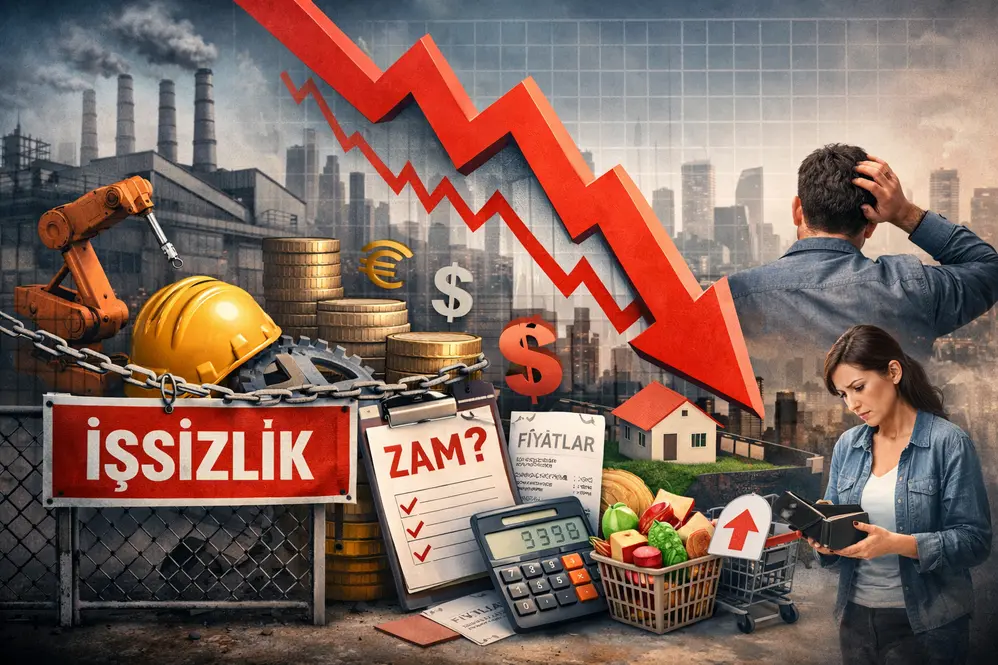
Economic news frequently features expressions like “industrial production declined,” “manufacturing slowed down,” or “there are signs of weakening on the production side.” However, for most people, the real question is this: What happens if industrial production falls? Does this situation only affect factories and large corporations, or does it reflect on many areas of daily life, from grocery prices to job postings, wage increases to the business volume of small tradespeople?
In reality, the answer to the question of what happens if industrial production falls is quite broad. This is because industrial production is one of the core indicators that affects not only the production capacity of an economy but also order flow, investment appetite, employment, exports, and the overall environment of trust. Although a weakening on the production side may look like a technical data point at first glance, over time it can affect many areas from household budgets to the job market.
In this article, we will address the questions of what happens if industrial production falls, how an economic slowdown reflects on daily life, and how a decline in production affects prices and employment, using simple, human language and examples.
1. What Is Industrial Production?
Industrial production is an important economic indicator that shows the total production performance delivered by factories, manufacturing plants, energy production areas, and mining activities in a country.
To put it more simply, industrial production tells us:
- How fast are the wheels of production turning in a country?
This data is vital because many areas in an economy depend on industry. When production is strong, orders increase, raw materials move, transportation revives, demand for labor may rise, and firms can look to the future with more confidence. Conversely, when production slows down, many links in the chain begin to be affected simultaneously.
That is why the question of why industrial production is important matters not just to economists, but also to wage-earning employees, small businesses, investors, and savers.
2. What Happens If Industrial Production Falls?
What happens if industrial production falls?
The clearest answer can be given as follows: The production side of the economy slows down, and this slowdown can spread over time to many areas, from employment to income, expenditures to the sense of confidence.
When industrial production falls, companies generally begin to act more cautiously. If new orders weaken, firms may lower production volumes, reduce shifts, limit overtime, and postpone new investment plans. These effects might not be felt by everyone in the short term, but they can become more visible within a few months.
To see this process more clearly, we can look at the table below:
| Condition | When industrial production is strong | When industrial production falls |
| Orders | May be on an upward trend | May weaken |
| Investment decision | Can be taken more willingly | May be postponed |
| Hiring | Can be more vibrant | May become more cautious |
| Overtime | May increase | May decrease |
| Supply chain | Remains vibrant | May slow down |
| Economic confidence | Can be relatively strong | May weaken |
This table shows us that the answer to what happens if industrial production falls is not just “factories produce less.” The real issue is that it can create a chain reaction across the entire economy.
3. How Does a Decline in Industrial Production Affect Daily Life?
3.1. Finding a job may become harder
When production in the economy slows down, firms usually try to control their costs first. This can lead to a more cautious approach to hiring new staff. It does not always mean direct layoffs; sometimes the number of new job postings simply decreases, or hiring processes take longer.
The effects can be felt more quickly in these specific areas:
- Factory and production workers
- Logistics and transportation sector
- Sub-industry suppliers
- Technical service and maintenance teams
- Small businesses dependent on regional industry
Therefore, the question of what happens if industrial production falls is directly important for a job seeker.
3.2. Wage increases may weaken
When production weakens, businesses calculate their income expectations more carefully. For employees, this can mean lower bonuses, more limited fringe benefits, and wage increases that may fall short against inflation.
At this point, the common feeling people experience is this:
“I haven’t lost my job, but my income growth isn’t as strong as it used to be.”
A slowdown in the economy is often felt in this manner first.
3.3. Small tradespeople can also be affected
A drop in industrial production does not only concern factory owners. The food business around the factory, the shuttle service provider, the parts supplier, the business providing warehouse services, or the local shopkeepers in the region can also be indirectly affected by this slowdown.
In other words, a slowdown in production can sometimes create an air of economic contraction that is felt city by city, or even neighborhood by neighborhood.
4. How Does an Economic Slowdown Reflect on Daily Life?
The answer to how an economic slowdown reflects on daily life comes from within life itself for most people, rather than from numbers. People usually notice a slowdown through these signs:
| Situation seen in daily life | Possible economic background |
| Decrease in job postings | Firms acting cautiously |
| Limited salary increases | Weakening of income expectations |
| Postponement of major expenditures | Loss of confidence and uncertainty |
| Stagnation of business for tradespeople | Weakening of demand |
| Decrease in installment shopping | Pressure on the household budget |
| Increase in promotional campaigns | The need to keep sales alive |
This table clearly demonstrates that the answer to how an economic slowdown reflects on daily life is quite tangible. People often begin to feel this in their own budgets, surroundings, and spending habits long before the news bulletins report it.
5. If Industrial Production Falls, Do Prices Drop?
This is one of the most frequently asked questions. Many people expect prices to decline if production is weakening. However, in real life, it does not always work this way.
This is because prices are not determined solely by demand. At the same time, factors such as:
- Raw material costs
- Energy expenses
- Exchange rate movements
- Tax burdens
- Financing costs
- Tightness on the supply side
also affect prices.
Therefore, the price-side answer to what happens if industrial production falls is this:
A drop in production may create sales pressure in some areas, but this does not automatically mean life will become cheaper.
Sometimes an interesting situation arises: the economy slows down, but citizens still continue to feel the high cost of living. This is one of the most challenging aspects of an economic slowdown.
6. If Industrial Production Decreases, Which Areas Are Affected Faster?
Not every sector is affected at the same speed. Generally, areas directly linked to industrial production are affected earlier.
Areas that may be affected faster:
- Manufacturing industry
- Automotive and spare parts
- Textile and ready-to-wear clothing
- Metal and machinery
- Logistics and transportation
- Wholesale trade
- Small businesses in industrial zones
Areas that may be affected later or indirectly:
- Retail sales
- Service sector
- Individual consumption expenditures
- Entertainment and social expenditures
Therefore, when asking what happens if industrial production decreases, it should not be forgotten that every sector will not be affected in the same way at the same time.
7. Example Scenarios to Understand the Decline in Industrial Production
Let’s look at a few realistic examples to show the issue more clearly.
- Example 1: An automotive supplier businessAn automotive sub-industry firm starts receiving fewer orders from the main manufacturer. In the first phase, new machinery investment is postponed. Then, overtime hours are reduced. Next, temporary staff recruitment is halted. This development affects not only the factory but also the hauler carrying goods to that factory and the local tradespeople nearby.
- Example 2: A small restaurant in an industrial zoneEven if the number of workers employed in an organized industrial zone does not drop, overtime decreases. Employees reduce the frequency of eating out. This pulls down the daily turnover of the small restaurant. Thus, the slowdown in industrial production reaches a business that does not engage in direct production.
- Example 3: Household budgetA family feels less comfortable about their job security. Because of this, they postpone renewing white goods, changing cars, or doing home renovations. This is exactly the most visible answer to how an economic slowdown reflects on daily life.
8. How Can the Household Budget Be Protected If Industrial Production Falls?
During periods of economic slowdown, the important thing is not to panic, but to act more carefully. People who read the question of what happens if industrial production falls correctly can take firmer steps in budget planning.
8.1. Re-evaluate major expenditures
Non-essential large purchases can be postponed for a while. Extra caution should be exercised particularly with expenditures to be made using credit.
8.2. Create an emergency fund
It is important to create a safety margin that can cover a few months’ expenses against a possible disruption in income flow.
8.3. Try to ease the debt burden
Debts with a high interest burden are felt more heavily during periods of economic slowdown. Therefore, it may be wise to avoid unnecessary new borrowing.
8.4. Diversify income streams
If possible, fields that can generate additional income should be considered. Being dependent on a single source of income can become riskier during an economic slowdown.
9. Does a Drop in Industrial Production Always Signal Bad News?
No. It is not correct to make a definitive judgment by looking at a single data point. Sometimes, the drop in industrial production can be temporary. Seasonal effects, calendar differences, short-term decreases in foreign orders, or inventory corrections can affect this data.
For this reason, when evaluating industrial production, it is necessary to look at the following indicators together:
| Indicators to be monitored together | Why is it important? |
| Capacity utilization rate | Shows how actively factories are operating |
| Export data | Helps understand the strength of foreign demand |
| Unemployment rate | Important to see the impact on employment |
| Confidence indices | Reflects company and consumer expectations |
| Retail sales | Shows the strength of domestic demand |
Therefore, when answering what happens if industrial production falls, one must look at the general economic picture instead of a single data point.
10. Why Is This Topic Gaining More Importance in 2026?
In 2026, one of the titles that users are most curious about in economy-related content is the relationship between production, slowdown, and employment. This is because people no longer just ask “what is the inflation rate?”; they also ask more daily and personal questions like “where is the job market heading?”, “how should I manage my spending?”, and “will the weakness in production affect me?”.
For this reason, the headline of what happens if industrial production falls is not just a technical economics topic; it is also a powerful subject carrying a perspective on personal finance, job security, and daily life.
Frequently Asked Questions
What happens if industrial production falls?
When industrial production falls, pressure can build up on orders, investment plans, hiring, and economic confidence. Over time, this situation can be felt in daily life through finding jobs, income growth, and spending behaviors.
Why is industrial production important?
Because industrial production gives an early signal about the vitality of an economy. When production is strong, employment and trade can mobilize; when it weakens, the risk of a slowdown may increase.
How does an economic slowdown reflect on daily life?
It can reflect through effects such as a decrease in job postings, weakening of wage increases, consumers postponing their expenditures, and tradespeople experiencing stagnation in business volume.
Do prices drop when industrial production falls?
Not always. Prices are shaped not only according to demand, but also according to costs, exchange rates, energy expenses, and supply conditions.
If industrial production decreases, which sectors are affected more?
Generally, manufacturing, automotive, textiles, metals, machinery, logistics, and sub-industries are affected earlier.
Conclusion
What happens if industrial production falls?
The most accurate answer to this question is this: The production rhythm in the economy weakens, and this weakness can reflect over time on many areas from the labor market to the household budget.
However, the important thing here is to evaluate the issue not through the language of fear, but with a correct economic reading. A drop in industrial production can sometimes be temporary, and sometimes the harbinger of a broader economic slowdown. Therefore, the most accurate approach for both individuals and businesses is to read production data together with unemployment, confidence, demand, and budget balance.
In summary, the question of what happens if industrial production falls is an important question that should be asked not only by economists, but by anyone who wants to manage their daily life more consciously.
Information Note
This content has been prepared solely for general informational purposes. It is not binding on its own in terms of investment, credit, commercial decisions, or financial planning. Economic indicators may change periodically. Therefore, when making decisions, current data and personal financial situations should be evaluated together.